Removable Partial Dentures can be a practical option when you have lost some of your natural teeth but still have healthy teeth remaining. They are designed to fill the gaps and help you eat, speak, and smile more comfortably.
But what exactly are removable partial dentures? How do they stay in place? Will they feel comfortable?
These are common questions, especially if you are considering replacing missing teeth for the first time.
What Are Removable Partial Dentures?
At Minha Dental Surgery Clinic, partial dentures may be considered after assessing your remaining teeth, gums, bite, and overall oral health. The right option depends on your individual needs, not simply on how many teeth are missing.
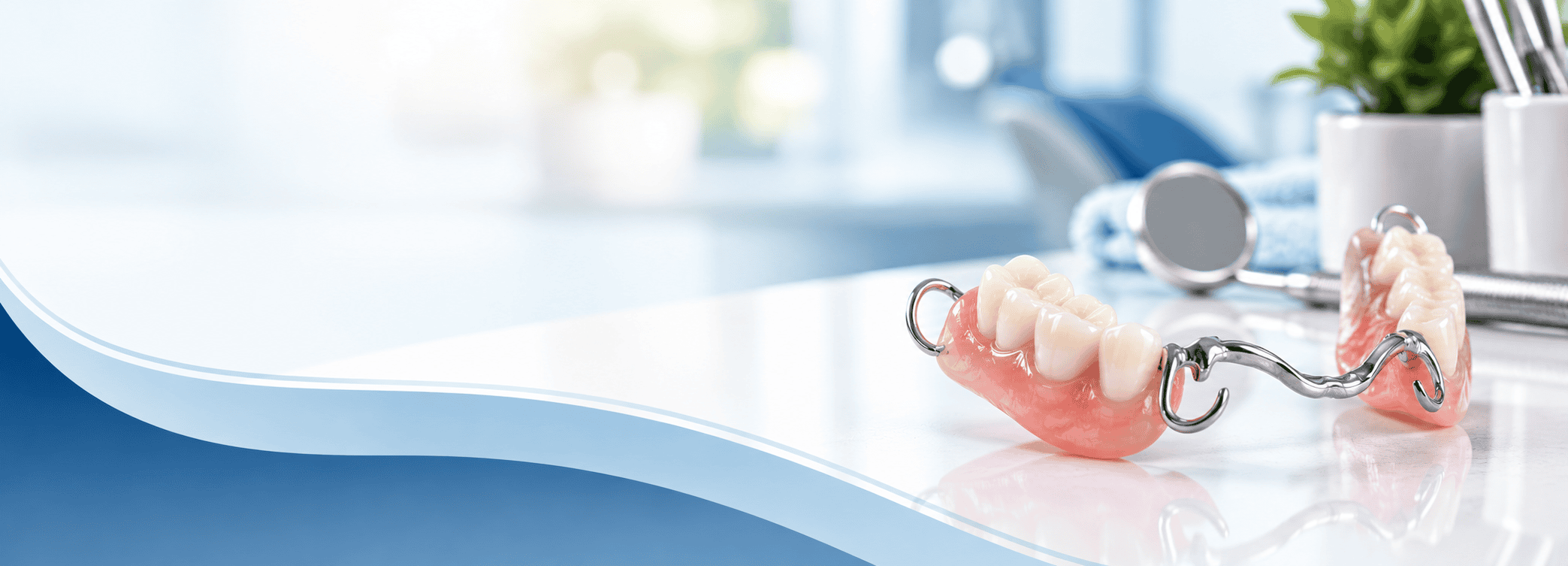
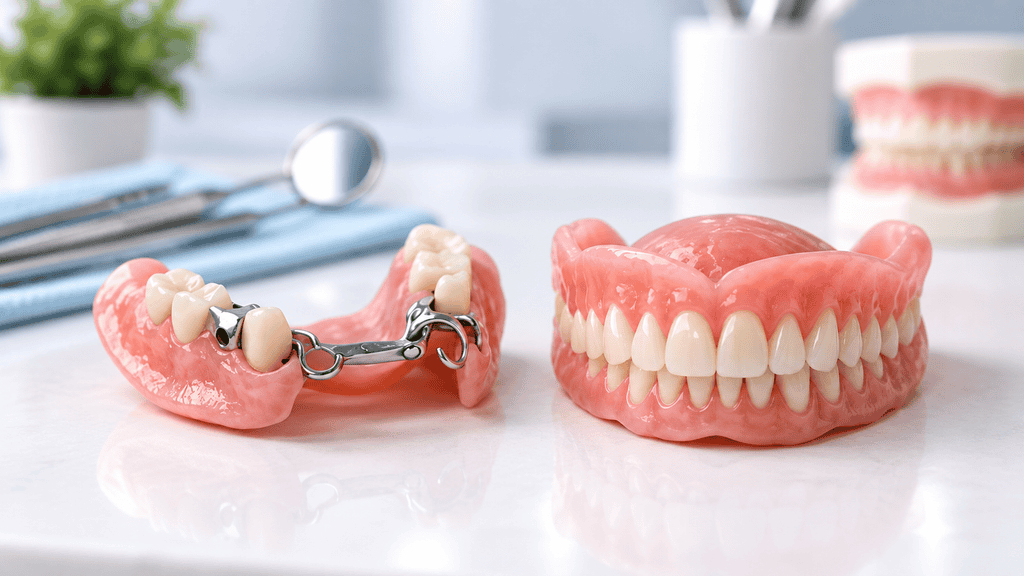
Removable partial dentures are dental appliances used to replace some missing teeth when natural teeth are still present.
Unlike a fixed bridge or other fixed restoration, you can remove a partial denture from your mouth for cleaning and maintenance.
A partial denture usually includes:
- Artificial teeth to replace the missing teeth
- A base that sits against the gums
- Components that help provide support and stability
- A design that works with your remaining natural teeth
The exact design depends on where your teeth are missing and the condition of the teeth that remain.
For example, if you have lost several teeth on one side of your mouth but still have suitable natural teeth, a partial denture may be one treatment option.
How Do Removable Partial Dentures Work?
A partial denture fills the spaces created by missing teeth.
Depending on its design, it may receive support from the gums and remaining natural teeth. Some partial dentures use clasps or other components to improve stability.
Your dentist will assess your mouth before recommending a design.
Factors that may be considered include:
- Number and position of missing teeth
- Condition of remaining teeth
- Gum health
- Bite
- Jaw and oral tissues
- Your ability to maintain good oral hygiene
- Your personal treatment needs
This assessment matters because a partial denture needs suitable support to work properly.
1. They Can Replace Several Missing Teeth
Losing one tooth is different from losing several.
When multiple teeth are missing, you may notice changes in chewing, speech, or the appearance of your smile. A partial denture can fill these spaces with artificial teeth.
It may help you:
- Chew food more comfortably
- Speak more clearly
- Restore missing areas of your smile
- Feel more comfortable in social situations
- Avoid leaving visible gaps
The result depends on your individual mouth and the design of the denture.
A partial denture does not bring your natural tooth back. It provides a removable replacement that is designed to work with the teeth and tissues you still have.
2. Your Remaining Teeth Matter
One of the most important parts of partial denture treatment is the condition of your remaining natural teeth.
These teeth may provide support for the appliance, depending on the design.
That means you should not think of the denture as a replacement for all dental care.
You still need to:
- Brush your natural teeth twice a day
- Clean between your teeth
- Keep your gums healthy
- Clean the denture as instructed
- Attend dental examinations
If the remaining teeth develop cavities or gum problems, the fit and function of the partial denture may also be affected.
Taking care of your natural teeth is part of taking care of your denture.
3. Getting Used to a New Denture Takes Time
A new partial denture may feel unusual at first.
You might notice it when you speak, eat, or move your tongue. Some people also need a little practice to pronounce certain words comfortably.
That is normal during the adjustment period.
You can make the transition easier by:
- Starting with softer foods
- Cutting food into smaller pieces
- Chewing slowly
- Practising speaking at home
- Wearing the denture according to your dentist’s instructions
If the denture repeatedly causes soreness, rubbing, or discomfort, contact your dentist.
A denture should not be something you simply tolerate if it remains painful.
4. Eating With Partial Dentures May Need Practice
One of the first questions people ask is, “Will I be able to eat normally?”
You can eat many different foods with a well-fitted partial denture, but it may take some practice.
Start with foods that are easier to chew. As you become more comfortable, gradually return to your usual diet.
You may need to be careful with very hard, sticky, or tough foods.
It can also help to:
- Cut food into small pieces
- Chew on both sides when possible
- Avoid biting directly into very hard foods
- Eat slowly while getting used to the appliance
Your experience will depend on the number and position of missing teeth and the design of your partial denture.
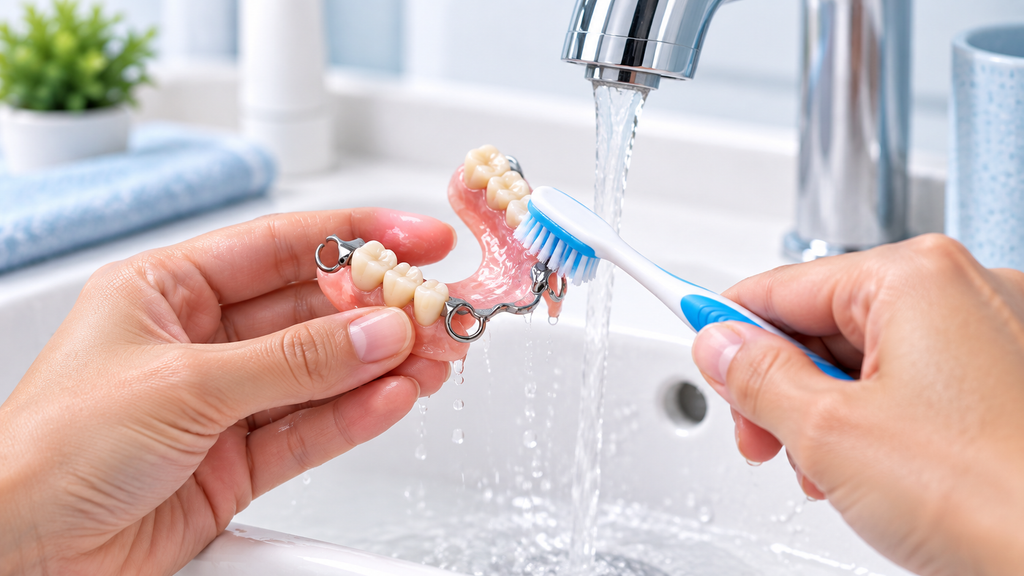
5. Cleaning Your Partial Denture Is Essential
Your denture needs daily cleaning.
Food particles and plaque can collect around the appliance, particularly near areas that contact your natural teeth and gums.
A basic care routine includes:
- Remove the denture as instructed.
- Rinse it after meals when possible.
- Clean it using a denture-safe method.
- Brush your natural teeth with fluoride toothpaste.
- Clean your gums and tongue gently.
- Store the denture as recommended when it is not being worn.
Do not use very hot water because heat may change the shape of some denture materials.
Your dentist can explain the most suitable cleaning routine for your particular appliance.
6. Your Partial Denture May Need Adjustments
Your mouth does not stay exactly the same over time.
Changes in your gums, remaining teeth, or supporting tissues can affect how the denture fits.
You may notice:
- The denture feels loose
- It moves while eating
- Food gets trapped underneath
- You develop sore spots
- Speaking becomes uncomfortable
- The denture no longer feels as stable
These changes do not necessarily mean you need a completely new denture.
Your dentist may be able to adjust or modify the appliance depending on the problem.
Do not try to bend, cut, or repair it yourself.
7. Partial Dentures Are One of Several Treatment Options
A removable partial denture may suit some people, but it is not the only way to replace missing teeth.
Depending on your oral health, your dentist may discuss options such as:
- Dental bridges
- Dental implants
- Implant-supported restorations
- Removable partial dentures
Each option has different requirements, benefits, costs, maintenance needs, and treatment stages.
For example, dental implants require adequate bone and good oral health, while a removable partial denture does not involve placing an implant into the jaw.
Your dentist can explain the available choices after examining your mouth.
Who May Need Removable Partial Dentures?
Partial dentures may be considered when you have several missing teeth but still have natural teeth that can support the appliance.
They may be suitable in different situations, depending on your dental condition.
Your dentist may assess:
- Where the teeth are missing
- How many teeth are missing
- The health of your remaining teeth
- Your gum condition
- Your bite
- The condition of your jaw and oral tissues
- Your ability to clean and maintain the appliance
There is no single design that works for everyone.
How Long Do Removable Partial Dentures Last?
There is no fixed lifespan that applies to every partial denture.
How long one lasts can depend on:
- The material and design
- Daily use
- Cleaning habits
- Changes in your mouth
- Condition of your remaining teeth
- How well the denture is maintained
A denture may need adjustment, repair, relining, or replacement if it becomes damaged or no longer fits properly.
Regular dental examinations can help identify these changes.
Can You Sleep With a Partial Denture?
Your dentist will advise you about when to wear and remove your partial denture.
Many patients are advised to remove removable dentures while sleeping so the oral tissues can rest, and the appliance can be cleaned.
Your individual instructions may differ depending on your dental condition and the type of appliance you have.
Follow the instructions given for your specific denture rather than following a general routine from someone else.
What Should You Ask Before Getting a Partial Denture?
Before starting treatment, ask your dentist questions such as:
- Why is a partial denture suitable for me?
- What type of partial denture do I need?
- How will it stay in place?
- How long will adjustment take?
- What foods should I avoid?
- How should I clean it?
- How often will I need follow-up appointments?
- What other tooth replacement options are available?
Getting clear answers can make the treatment process easier to understand.
Frequently Asked Questions About Removable Partial Dentures
What is a removable partial denture?
It is a removable dental appliance used to replace some missing teeth while natural teeth remain in the mouth.
Can I eat normally with a partial denture?
Most people can eat many foods with practice. Starting with softer foods and smaller pieces can make the adjustment easier.
Will a partial denture look natural?
A partial denture can be designed to resemble your natural teeth. Its appearance depends on the denture design, tooth arrangement, colour, and individual requirements.
Can a partial denture damage my natural teeth?
A properly designed and maintained partial denture should work with your remaining teeth. Good brushing, cleaning between teeth, and regular dental examinations remain important.
Can a partial denture become loose?
Yes. Changes in your gums, supporting tissues, or remaining teeth can affect the fit over time. Your dentist can assess whether an adjustment or other treatment is needed.
How do I clean a partial denture?
Remove it as instructed, rinse it, clean it using a denture-safe method, and continue brushing and cleaning your natural teeth every day.
Are partial dentures better than dental implants?
There is no single option that is right for everyone. Your dentist should assess your oral health, remaining teeth, bone condition, treatment preferences, and long-term maintenance needs before recommending an option.
Choosing Partial Dentures for Your Needs
Replacing missing teeth is not just about filling a visible gap.
You also need to think about chewing, speaking, comfort, cleaning, and the health of your remaining teeth.
If you are considering partial dentures, a proper dental examination is the first step. It helps your dentist understand your mouth and discuss the treatment options that may suit you.
At Minha Dental Surgery Clinic, partial denture treatment can be planned around your individual dental condition, the number of missing teeth, the health of your remaining teeth, and your everyday needs.
A good denture should fit into your routine. And if the fit changes later, do not ignore it. A simple dental review can help determine what needs to be adjusted or addressed.